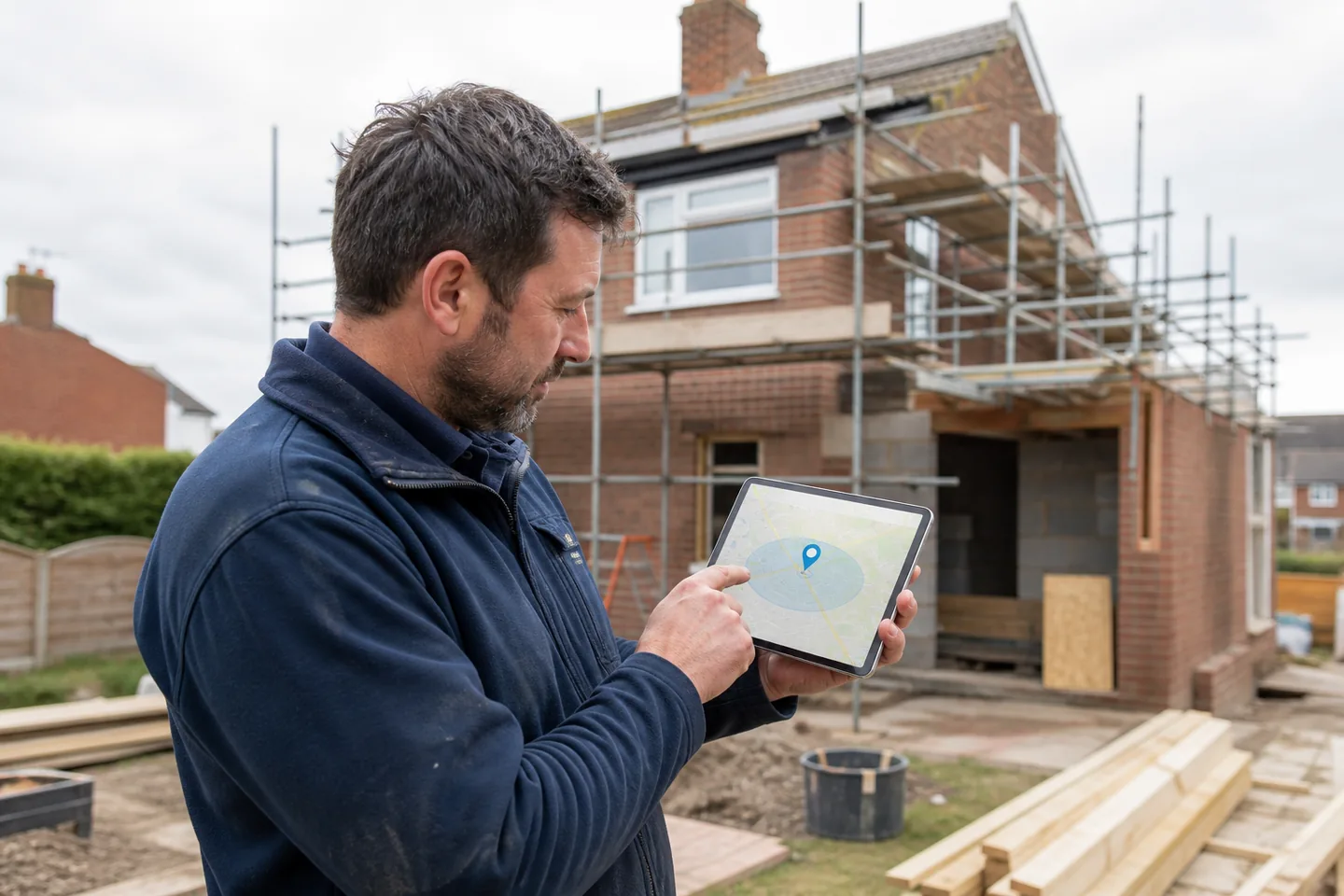
Traditional Google map packs often give a searcher three local businesses to consider. AI-generated local answers can present an even shorter shortlist, sometimes naming only two.
That sounds like a small visual change. For a building firm, it is a major competitive change: when the answer contains fewer businesses, being fourth or fifth is not “nearly visible”. The company may not appear in the initial consideration set at all.
Recent local search analysis gives the issue useful scale. Across one study, AI local packs surfaced about 32% as many unique businesses as traditional local packs. In other words, that dataset showed roughly 68% fewer unique companies—not merely 32% fewer.
The response is not to create “AI content” or add a special file and hope for inclusion. Builders need clearer, corroborated evidence about what they do, where they operate and why they fit a particular request.
What the research found
Sterling Sky’s 2026 local search study reports analysis conducted with Jepto across 322 markets and 179 Google Business Profiles.
The key findings included:
- 88% of markets showed fewer unique businesses in AI local packs than in traditional local packs
- AI local packs surfaced about 32% as many unique businesses overall
- AI local answers often displayed two businesses where traditional map packs commonly displayed three
This is a meaningful study, not a universal law. Results depend on query, market, location, device and Google’s evolving interface. It does not prove that every builder has lost 68% of visibility.
It does show a directional risk: AI answers may compress local discovery into a smaller group.
Why shortlist compression matters for construction searches
A homeowner rarely knows every suitable local company. The search interface helps create the shortlist.
For a query such as “builder for a kitchen extension near me”, an AI response may try to interpret several things at once:
- service relevance
- geographic suitability
- reputation and prominence
- evidence of similar work
- practical details such as availability or customer type
If the answer selects only two firms, it can reduce exploration. The customer may still open Maps or normal results, but the first recommendation frame has already been set.
Building businesses therefore need to become easy to select and easy to verify—not merely easy to crawl.
There is no separate “AI ranking” switch
Google’s official guidance for AI features and your website says the same foundational SEO practices remain relevant. Pages need to be indexed and eligible to appear in Search; there is no special AI text file or unique schema required for inclusion.
That means the work is familiar:
- make important pages crawlable and indexable
- describe services clearly
- support claims with visible evidence
- keep business information consistent
- use structured data that matches the page
- provide a good page experience
Our broader guide to AI search optimisation for builders explains these foundations. The local shortlist issue adds urgency, not a completely different discipline.
Define the job you want to be selected for
“Builder” is too broad to guide a useful content and evidence strategy. One firm may specialise in extensions around Southampton; another may focus on listed-property renovation; another may be a roofing contractor that occasionally undertakes general work.
Choose a small group of commercially important use cases and make each one explicit:
- service type
- customer or property fit
- genuine service area
- proof of relevant completed work
- constraints the team can handle
- next step for an enquiry
This does not mean stuffing the full phrase into headings. It means ensuring a reader and a machine can understand the match without inference.
Make the Business Profile precise
The Google Business Profile remains a central source for local understanding. Review:
Primary category
Choose the category that best represents what the business is. Do not choose a category simply because it has a desirable keyword.
Additional categories
Use a limited number for genuine business functions. Services belong in the services field, not as a pile of inaccurate categories. The Business Profile category guide provides a decision framework.
Address and service area
Show a customer-facing address only when it is genuinely staffed and eligible. Otherwise configure the business as a service-area business and hide the address.
Hours and contact details
Make the customer journey reliable. A recommendation is wasted when the phone is unanswered during advertised hours or the website link fails.
Photos and reviews
Use recent, permitted project photos and maintain a steady process for honest reviews. They help a prospect verify that the company is active and relevant.
Build service pages around decisions, not phrases
A useful service page should help a homeowner decide whether the firm is suitable.
For an extension page, answer:
- what types of extension the team undertakes
- where it works
- whether it manages design, planning or building control stages
- common constraints
- what information is needed for an initial conversation
- examples of completed work
Avoid publishing multiple near-identical pages such as “single-storey extension builder”, “rear extension builder” and “side-return extension builder” unless each page has distinct value and evidence.
Strong service pages for trade enquiries follow the same structure even when the example trade differs: one clear purpose, useful scope, proof and a realistic conversion path.
Turn projects into retrieval-ready evidence
AI systems benefit from passages that make a fact understandable in context. A project page should not say only “another great job completed”.
A stronger description includes:
- the broad location
- property and project type
- the customer’s original problem
- scope of the work
- decisions and constraints
- measurable facts that can be substantiated
- photographs with meaningful captions
- outcome and next step
For example:
This rear extension in Eastleigh added a combined kitchen and dining space to a 1930s semi-detached home. Access was limited to a side path, so deliveries and waste removal were sequenced to keep the neighbouring drive clear.
That paragraph is specific enough to help a homeowner and concise enough to be quoted accurately. It avoids inventing a project value, energy saving or completion time.
Use the builder’s case-study framework to collect the evidence while the job is still fresh.
Earn corroboration beyond your own site
A company website is a first-party claim. Other reputable sources can corroborate the business’s identity and work.
Relevant signals may include:
- trade association or certification profiles
- manufacturer-approved installer listings
- local press coverage of a genuine project or community contribution
- architect, supplier or project-partner mentions
- consistent, legitimate business directories
- detailed customer reviews
Quality matters more than collecting every possible citation. An accurate profile on a respected industry source is more useful than hundreds of copied listings.
Google’s newer Preferred Sources feature is not a shortcut for local commercial rankings, but it reinforces a wider point: identifiable, consistently useful sources are easier for people to trust and revisit.
Use structured data conservatively
Structured data can clarify entities and page types, but it cannot make an unsupported claim true.
Consider accurate:
Organizationor an appropriateLocalBusinesssubtypeArticleorBlogPostingon genuine editorial contentBreadcrumbListmatching visible navigationImageObjectfor important original imagery
Keep names, telephone numbers, URLs and addresses consistent with visible content. Do not mark up hidden reviews, fake aggregate ratings, invented service areas or unsupported prices.
The strongest structured data describes a strong page. It does not rescue a thin one.
Make key facts easy to extract
Long prose can demonstrate expertise, but key answers should not be buried.
Use:
- descriptive headings
- short definitions near the relevant question
- comparison tables when choices matter
- labelled steps for genuine processes
- image captions that explain what is shown
- concise summaries followed by detail
This improves accessibility and conversion as well as machine interpretation.
For example, a page can state the service area in one clear sentence, then explain limitations and examples. It should not force a visitor to infer location from ten project captions.
Track visibility beyond one ranking number
AI answers make traditional rank tracking less complete. Monitor several indicators:
- non-brand Search Console impressions and clicks
- queries and pages gaining or losing visibility
- Business Profile calls and website visits
- qualified enquiries by service and town
- branded search growth
- referral visits from relevant platforms
- manual, documented samples of important AI or local results
Search Console does not provide a perfect “AI shortlist” report. Use it as part of the evidence, not a complete attribution system. Our guide to Google Search Console AI reporting for builders explains the current limits.
A six-week shortlist plan
Week 1: choose priorities
Select three to five services with real capacity and margin. Define the genuine towns or radius served.
Week 2: correct profile facts
Review categories, services, hours, website link, phone, address visibility and service area.
Week 3: improve one priority page
Clarify scope, customer fit, process, evidence and enquiry route.
Week 4: publish one strong case study
Use a completed project with permission, original images and a privacy-safe location.
Week 5: strengthen corroboration
Correct important industry profiles and request honest customer feedback.
Week 6: measure and repeat
Review qualified leads and query visibility. Improve the next priority based on evidence.
What not to do
Avoid shortcuts that create more pages but less confidence:
- dozens of generated town pages
- fake local offices
- AI-written project stories for jobs that never happened
- fabricated awards or statistics
- keyword-heavy Business Profile names
- schema containing claims absent from the page
- buying mentions on unrelated websites
These tactics can create policy risk and make the business harder to trust.
Final thoughts
AI local results can compress a broad market into a small shortlist. The exact interface will continue to change, but the strategic response is stable: make the business’s relevance specific, its facts consistent and its proof easy to verify.
Do not chase a mysterious AI signal. Build a clear Business Profile, focused service pages, evidence-rich projects and reputable corroboration. Then measure whether visibility becomes the right enquiries.
If your building firm needs an evidence-led plan for local and AI search visibility, contact Solent SEO.
Frequently Asked Questions
Do AI local packs show 32% fewer businesses?
The cited study found about 32% as many unique businesses as traditional local packs, which is roughly 68% fewer in that dataset. It does not apply identically to every search.
Is there special schema for appearing in AI search?
Google does not require special AI schema. Use accurate structured data supported by visible content and follow normal technical and content best practices.
Should builders create more town pages?
Only when each page has genuine local value and evidence. Near-identical pages made only to capture location phrases can create doorway-page risk.
Are reviews enough to make the shortlist?
No. Reviews are one source of trust. Relevance, profile accuracy, website content, project evidence, prominence and the specific query can all matter.
How can a building firm measure AI visibility?
Combine Search Console trends, Business Profile interactions, qualified lead tracking and documented manual samples. No single report provides a complete view.